
Why Water Is the Most Valuable Asset in Farmland: The One Factor Every Investor Must Verify | MyFarmland.co
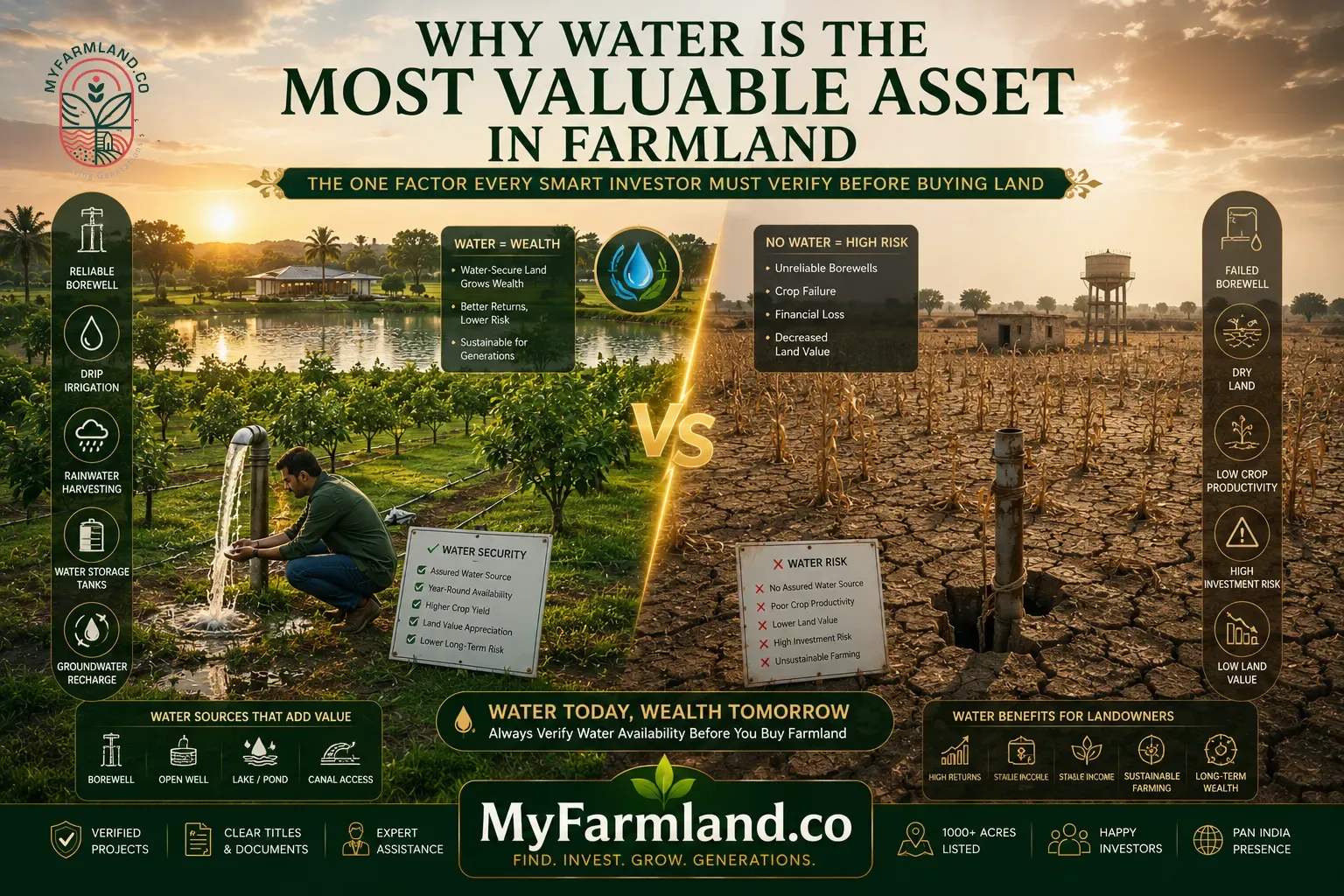
Why Water Is the Most Valuable Asset in Farmland
Most first-time farmland buyers ask one question:
"How much does the land cost?"
Experienced investors ask a different question:
"Where does the water come from?"
This single question can determine whether a farmland investment remains productive, attractive, and valuable for decades.
You can improve roads.
You can build fencing.
You can plant trees.
But without reliable water, farmland loses much of its potential.
That's why seasoned investors often say:
"You're not just buying land—you’re buying access to water."
Why Water Is More Valuable Than the Land Itself
Imagine two identical 10-acre farms.
Both have:
- Clear legal documents
- Good road access
- Similar soil
- Same purchase price
The difference?
One has a reliable water source.
The other depends entirely on seasonal rainfall.
Over time, the farm with dependable water is generally more versatile, easier to cultivate, and often more attractive to future buyers.
Water Determines What Your Land Can Become
Reliable water opens up multiple possibilities:
- Fruit orchards
- Timber plantations
- Organic farming
- Vegetable cultivation
- Farmhouses with landscaping
- Agroforestry
- Weekend farm retreats
Without sufficient water, many of these uses become difficult or expensive to sustain.
Types of Water Sources in Farmland
1. Borewells
Borewells are one of the most common water sources for agricultural land.
Before buying, ask:
- What is the borewell depth?
- Is it operational year-round?
- What is the average yield?
- Has it been tested recently?
2. Open Wells
Traditional open wells can provide a dependable water source in suitable locations and are often easier to inspect visually.
3. Lakes and Ponds
Natural or man-made water bodies can help:
- Recharge groundwater
- Support irrigation
- Improve biodiversity
- Enhance the landscape
Land located near healthy water bodies may benefit from better groundwater conditions, depending on local geology.
4. Irrigation Canals
Some agricultural regions have canal irrigation systems that support farming activities.
Understand:
- Water availability schedule
- Maintenance
- Reliability
5. Rainwater Harvesting
Well-designed rainwater harvesting systems can improve groundwater recharge and increase water security over time.
Why Groundwater Matters
A functioning borewell today doesn't guarantee long-term availability.
Groundwater depends on:
- Annual rainfall
- Local geology
- Recharge zones
- Nearby water bodies
- Responsible water usage
Understanding the broader watershed is just as important as inspecting the well itself.
Water and Land Value
When investors compare farmland, water availability is often one of the first factors evaluated.
Properties with reliable water generally attract broader interest because they can support more agricultural and lifestyle uses.
However, value also depends on location, legal status, infrastructure, and market conditions.
Water Supports Long-Term Plantation Investments
Tree-based investments such as:
- Mango
- Coconut
- Teak
- Sapota
- Guava
require consistent water, especially during establishment.
Without proper irrigation planning, plantation success becomes more challenging.
Climate Change Makes Water Even More Important
Changing weather patterns have increased the importance of sustainable water management.
Investors should evaluate:
- Historical rainfall
- Groundwater trends
- Water conservation practices
- Future resilience
Farmland with well-planned water resources may be better positioned for long-term sustainability.
Questions Every Investor Should Ask
Before buying farmland, ask:
- Is there a working borewell?
- How deep is the groundwater?
- Does the property have water storage?
- Are there nearby lakes or ponds?
- What irrigation systems are available?
- How is water managed during dry seasons?
These answers can provide valuable insight into the property's long-term usability.
Common Mistakes Buyers Make
Avoid these mistakes:
- Assuming every borewell has adequate yield.
- Visiting only during the rainy season.
- Ignoring local groundwater conditions.
- Failing to inspect water infrastructure.
- Relying only on verbal assurances.
Always verify water resources during your due diligence.
Water and Managed Farmland
In professionally managed farmland projects, water management is often a key operational focus.
Depending on the project, this may include:
- Drip irrigation
- Water storage tanks
- Recharge pits
- Rainwater harvesting
- Irrigation scheduling
Ask the developer how water is sourced, stored, and managed before investing.
Why Verification Matters
At MyFarmland.co, we believe that water should be evaluated with the same importance as legal documentation.
Our platform helps investors explore verified farmland opportunities while encouraging careful evaluation of:
- Water availability
- Legal ownership
- Accessibility
- Infrastructure
- Long-term investment fundamentals
Learn more at:
Conclusion
Many people think farmland value begins with location.
Experienced investors know it often begins with water.
Roads improve convenience.
Infrastructure creates opportunity.
Legal documents provide security.
But water determines whether the land can truly thrive.
Before you invest in farmland, don't just ask:
"How much does it cost?"
Ask the question that experienced investors ask first:
"Where does the water come from?"
The answer could influence the future of your investment for decades.
Frequently Asked Questions
Why is water so important when buying farmland?
Water supports agriculture, plantations, irrigation, and overall land usability. Reliable water resources are an important factor in evaluating farmland.
Should I inspect the borewell before buying?
Yes. Verify whether the borewell is operational, understand its depth and yield, and ask about seasonal performance.
Does farmland near lakes have better value?
Nearby lakes may support groundwater recharge in some areas, but each property should be evaluated individually based on hydrogeological conditions.
What is the best irrigation system for managed farmland?
Many managed farmland projects use drip irrigation because it can improve water efficiency, though the appropriate system depends on the crops and local conditions.
- Complete Checklist Before Buying Farmland in India
- Land Title Verification Guide
- Best Managed Farmland Projects Near Bangalore
- STRR Impact on Farmland Prices
- Top 5 Income Crops for Farmland
- Top 7 Mistakes Farmland Buyers Make
- ROI Per Acre Breakdown
- Top 10 Farmland Locations Near Bangalore
- water in farmland
- importance of water in agriculture
- farmland water availability
- borewell for farmland
- irrigation for farmland
- groundwater in farmland
- managed farmland investment
- farmland investment India
- agricultural land buying guide
- MyFarmland.co