
Why Red Sandalwood Is a Great Long-Term Investment | MyFarmland.co
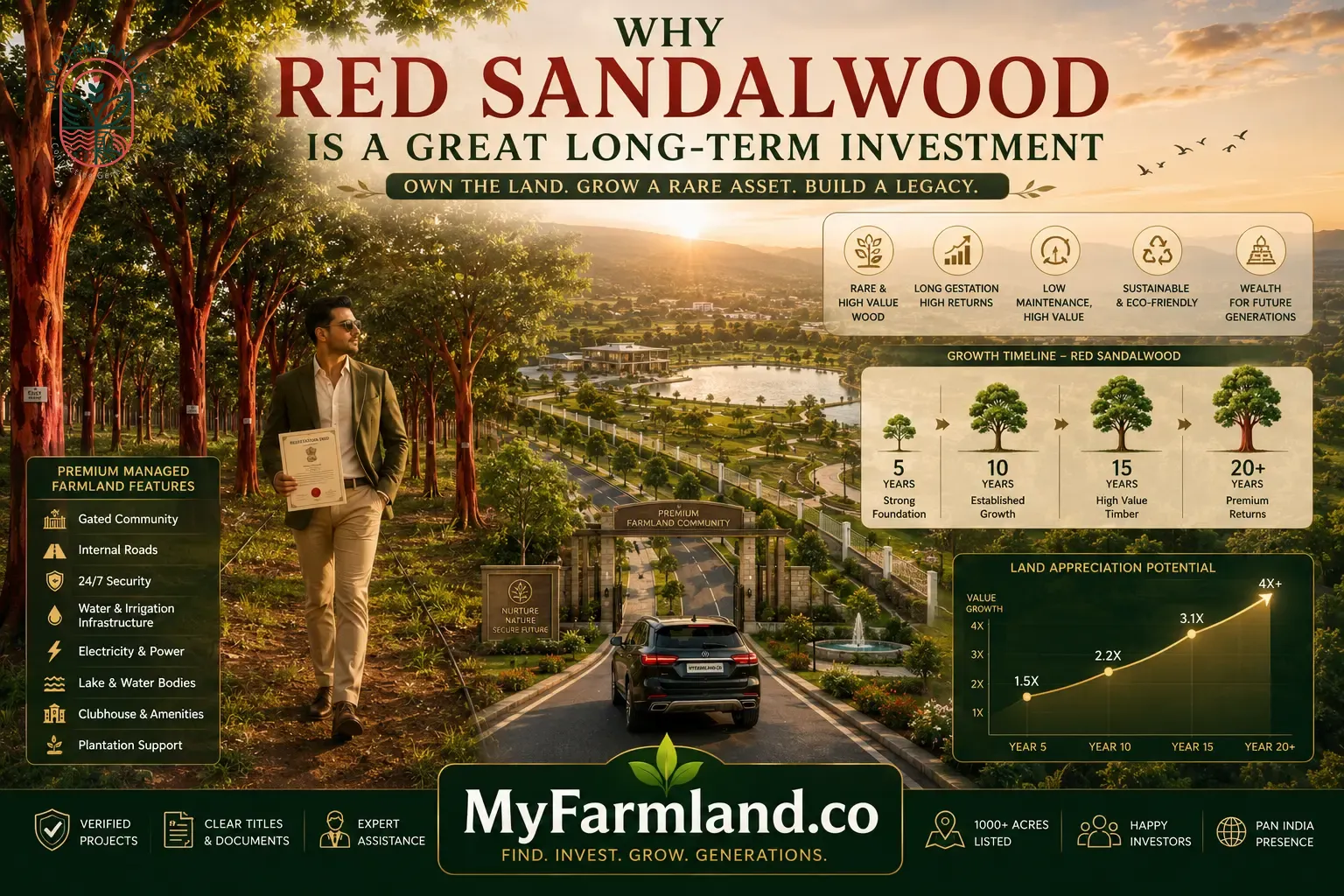
Why Red Sandalwood Is a Great Long-Term Investment
For decades, investors have built wealth through land, gold, and real estate.
Today, a growing number of long-term investors are exploring another valuable asset that grows naturally over time:
Red Sandalwood (Pterocarpus santalinus).
Known as one of the world's rarest hardwood species, Red Sandalwood has attracted attention because of its scarcity, premium international demand, and long growth cycle.
When combined with professionally managed farmland, it offers investors an opportunity to own a living asset while also participating in long-term land ownership.
What Is Red Sandalwood?
Red Sandalwood is a rare hardwood tree native primarily to parts of southern India, especially Andhra Pradesh.
Unlike ordinary timber species, Red Sandalwood is valued for its:
- Rich natural red color
- Dense hardwood
- Cultural significance
- Specialty industrial uses
- Limited natural availability
Because of its rarity, it has become one of India's most recognized high-value tree species.
Why Is Red Sandalwood So Valuable?
Several factors contribute to its long-term value.
1. Limited Natural Supply
Red Sandalwood grows naturally only in specific climatic conditions.
Its restricted geographic distribution makes it much rarer than common timber trees.
Scarcity has always been one of the strongest drivers of long-term value.
2. Slow Growth Creates Long-Term Value
Unlike seasonal crops harvested every few months, Red Sandalwood requires patience.
It matures over many years, making it a long-term plantation asset rather than a short-term income crop.
This slower growth cycle also limits supply.
3. Global Demand
Red Sandalwood is used in several industries, including:
- Luxury furniture
- Traditional handicrafts
- Decorative woodwork
- Musical instruments
- Cultural and religious artifacts
Demand varies across domestic and international markets and is subject to government regulations governing trade.
Why Investors Are Looking Beyond Traditional Assets
Many investors already own:
- Gold
- Apartments
- Mutual funds
- Stocks
Tree-based investments offer something different.
They combine:
- Land ownership
- Plantation development
- Environmental value
- Long-term wealth creation
This makes managed farmland with plantation potential attractive to investors seeking diversification.
The Advantage of Managed Farmland
One of the biggest concerns for investors is maintaining plantations.
Managed farmland communities often provide services such as:
- Tree maintenance
- Irrigation
- Security
- Landscape management
- Farm supervision
This allows investors to own plantation-based farmland without personally managing day-to-day operations.
Bangalore Investors Are Exploring Plantation Projects
As Bangalore continues expanding, nearby investment corridors have gained popularity for managed farmland.
These include:
- Hosur
- Denkanikottai
- Anekal
- Kanakapura
These regions offer:
- Pleasant climate
- Road connectivity
- Green surroundings
- Plantation-friendly landscapes
Land + Trees = Two Layers of Value
One reason plantation investments attract attention is that investors are purchasing:
1. The Land
A tangible asset with long-term ownership.
2. The Plantation
A living asset that matures over time.
This creates two separate value drivers:
- Land appreciation
- Plantation development
Both depend on market conditions, location, management, and applicable regulations.
Environmental Benefits
Tree plantations contribute to:
- Greener landscapes
- Improved biodiversity
- Carbon storage
- Better soil conservation
For investors who value sustainability, this adds a non-financial dimension to ownership.
Important Legal Considerations
Before investing in Red Sandalwood plantations, investors should understand that:
- Cultivation, harvesting, transport, and sale of Red Sandalwood are regulated.
- Rules vary by state.
- Necessary permissions and compliance requirements must be followed.
- Investors should verify that any project complies with applicable forestry and agricultural laws.
Always seek legal clarification before making investment decisions.
Questions Every Investor Should Ask
Before investing in any Red Sandalwood plantation project:
- Is the farmland legally verified?
- Who manages the plantation?
- What irrigation system is available?
- What tree maintenance services are included?
- What are the applicable state regulations?
- How are ownership records maintained?
Proper due diligence is essential.
Why Verification Matters
Successful farmland investing begins with transparency.
That's why many investors explore opportunities through
👉 MyFarmland.co
where they can discover:
- Verified farmland projects
- Plantation-focused communities
- Managed farmland opportunities
- Educational resources for farmland investors
Visit:
to learn more about verified farmland investment opportunities.
Conclusion
Red Sandalwood is not a quick-return investment.
It is a long-term plantation asset that combines:
- Natural scarcity
- Premium hardwood status
- Sustainable land use
- Long-term ownership
For investors who value patience, diversification, and tangible assets, Red Sandalwood plantations may form part of a broader farmland investment strategy.
The key is to focus on:
- Legally compliant projects
- Professional management
- Water availability
- Verified land ownership
- Long-term planning
As with any investment, conduct thorough due diligence and understand the applicable regulations before investing.
FAQs
Is Red Sandalwood a fast-return investment?
No. Red Sandalwood is generally considered a long-term plantation investment due to its slow growth cycle.
Can anyone invest in Red Sandalwood plantations?
Investment is possible through legally compliant projects, but cultivation, harvesting, transport, and sale are regulated. Always verify local laws before investing.
Why do investors combine Red Sandalwood with managed farmland?
Managed farmland can provide professional plantation maintenance, irrigation, and security, making long-term ownership more convenient.
Where can I explore verified plantation-based farmland projects?
Visit MyFarmland.co to discover verified farmland projects and learn more about plantation-based investment opportunities.
Red Sandalwood investment, Red Sandalwood plantation India, managed farmland with Red Sandalwood, tree plantation investment, premium farmland near Bangalore, long-term plantation investment, sustainable farmland investment, MyFarmland.co