
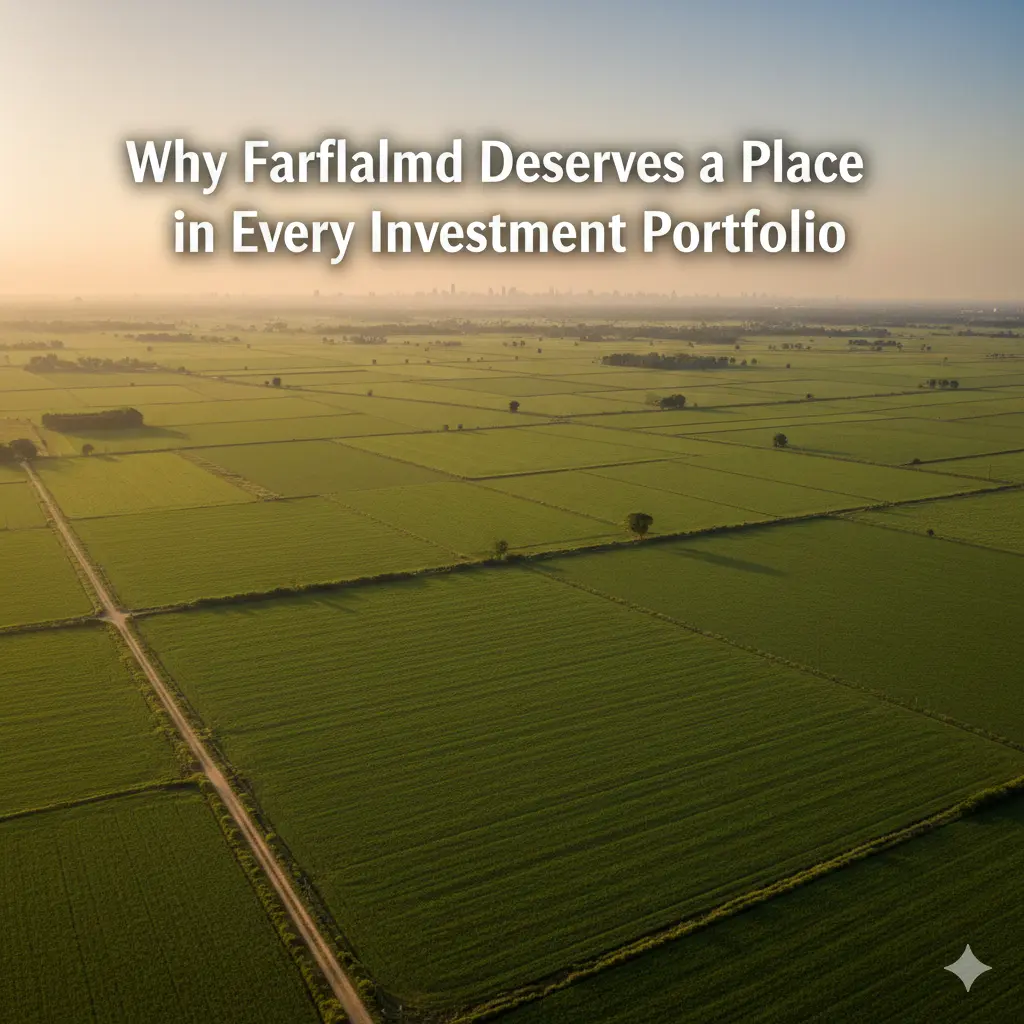
Why Farmland Deserves a Place in Every Investment Portfolio.
1️⃣ Low Correlation with Stock Markets
When stock markets fluctuate:
- Share prices move daily
- Investor sentiment shifts rapidly
Farmland, however, does not react to daily news cycles. Its value is driven by:
- Location
- Infrastructure growth
- Land scarcity
- Agricultural demand
This makes it relatively stable compared to equity-based investments.
2️⃣ Hedge Against Inflation
Land naturally appreciates over time due to:
- Increasing population
- Limited land supply
- Rising demand for food production
As inflation increases, tangible assets like land tend to maintain or grow their value.
3️⃣ Finite Supply, Growing Demand
No new land is being created. But demand continues to grow because of:
- Urban expansion
- Industrial development
- Agricultural needs
This supply-demand imbalance strengthens long-term value potential.
4️⃣ Lower Volatility Compared to Urban Real Estate
Unlike apartments:
- No depreciation from wear and tear
- No rental vacancy stress
- No frequent renovation costs
Farmland typically requires less structural maintenance.
5️⃣ Long-Term Capital Appreciation Potential
Farmland near:
- Expanding cities
- Industrial corridors
- Upcoming infrastructure
Often sees steady value growth over years rather than sudden spikes.
6️⃣ Psychological Stability
Investors often underestimate this factor.
Owning physical land provides:
- Security
- Control
- Tangible ownership
Unlike digital investments, farmland is something you can physically see and hold.
Final Thought
A well-balanced portfolio is not built on excitement — it is built on stability and diversification.
Farmland may not be the fastest-moving asset. But it can be one of the most grounded and resilient ones.
Smart portfolios aren’t just diversified across sectors — they’re diversified across asset classes.