
The Complete Checklist Before Buying Farmland in India (2026 Guide) | MyFarmland.co
The Complete Checklist Before Buying Farmland in India (2026 Guide)
Featured Snippet (Google Position #1 Target)
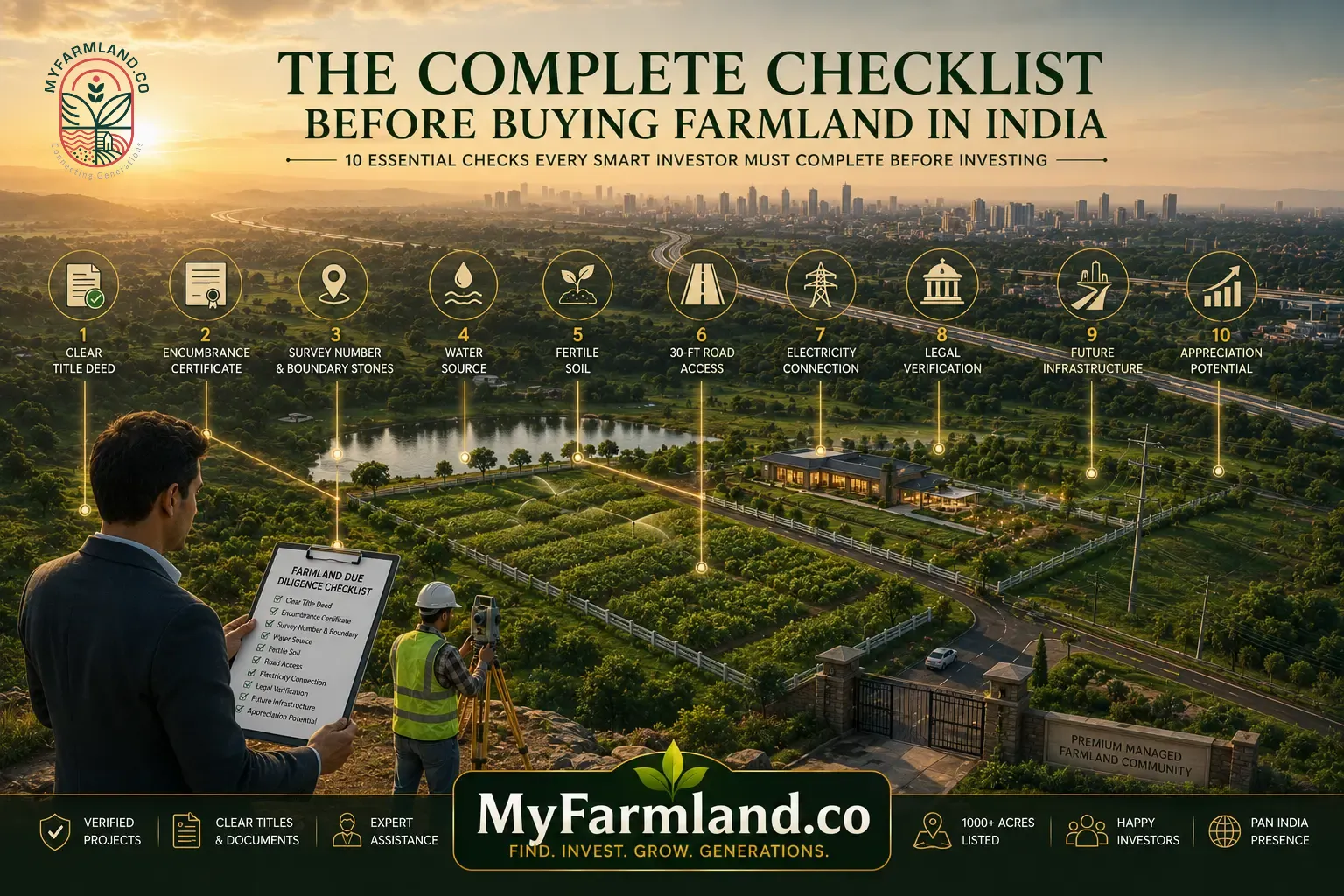
Before buying farmland in India, verify these 10 essential factors:
- Clear ownership title
- Encumbrance Certificate (EC)
- RTC/Patta/Revenue records
- Survey boundaries
- Water availability
- Soil quality
- Road access
- Zoning & land-use rules
- Nearby infrastructure
- Future development potential
Following this checklist helps reduce legal risks and improves long-term investment decisions.
Why Buying Farmland Is Different from Buying a Plot
Buying farmland is unlike purchasing an apartment or residential plot.
A farmland investment is influenced by:
- Legal ownership
- Agricultural regulations
- Water resources
- Soil fertility
- Accessibility
- Future infrastructure
- Long-term appreciation
Missing just one of these factors can turn a promising investment into a costly mistake.
That's why experienced investors follow a structured due diligence process.
1. Verify the Title Deed
The title deed confirms who legally owns the property.
Ensure that:
- The seller is the legal owner.
- The title is clear and marketable.
- Ownership history is consistent.
- There are no ownership disputes.
A clear title is the foundation of every safe land investment.
2. Obtain an Encumbrance Certificate (EC)
The EC reveals whether the property has:
- Existing loans
- Mortgages
- Court attachments
- Financial liabilities
Always verify the latest Encumbrance Certificate before proceeding.
3. Check Revenue Records
Depending on the state, verify documents such as:
- RTC
- Patta
- Chitta
- Adangal
- Mutation records
These records help confirm ownership and land classification.
4. Confirm Survey Boundaries
Never rely only on brochure maps.
Hire a licensed surveyor if necessary.
Verify:
- Survey number
- Boundary stones
- GPS coordinates
- Actual land dimensions
Boundary disputes are among the most common legal issues in land transactions.
5. Inspect Water Availability
Water determines the usability and productivity of farmland.
Check for:
- Borewell availability
- Groundwater levels
- Nearby lakes or canals
- Irrigation infrastructure
- Rainwater harvesting systems
Water availability significantly affects long-term value.
6. Evaluate Soil Quality
Healthy soil supports agriculture, plantations, and sustainable farming.
Look for:
- Fertile topsoil
- Proper drainage
- Suitable crop conditions
- Soil test reports (if available)
A simple soil assessment today can prevent future challenges.
7. Verify Road Access
A beautiful property has limited value if it cannot be reached easily.
Check:
- Public road access
- Internal roads
- Highway connectivity
- Year-round accessibility
Travel time is often more important than distance.
8. Understand Land-Use Regulations
Different states have different rules governing agricultural land.
Before buying, understand:
- Who is eligible to purchase agricultural land
- Local zoning rules
- Construction permissions
- Applicable conversion regulations
- Environmental restrictions
Consult a qualified legal professional if you are unsure.
9. Study Infrastructure Around the Property
Infrastructure often influences long-term demand.
Look for:
- National highways
- STRR connectivity
- Industrial corridors
- Proposed airports
- Metro expansion
- IT parks
- Educational institutions
Growing infrastructure can improve accessibility and market interest over time.
10. Evaluate the Location's Future Potential
Instead of asking:
"What is today's price?"
Ask:
"What will make this location attractive five or ten years from now?"
Key indicators include:
- Population growth
- Employment hubs
- Government infrastructure
- Tourism potential
- Weekend destination appeal
Long-term thinking often leads to better investment decisions.
Common Mistakes First-Time Buyers Make
Many investors:
- Buy only because the price is low.
- Ignore legal verification.
- Skip physical site visits.
- Believe unrealistic appreciation claims.
- Overlook water availability.
- Fail to verify survey boundaries.
These mistakes are avoidable with proper due diligence.
Why Choose Verified Farmland?
At MyFarmland.co, we believe that informed investors make better investments.
Our platform helps buyers explore:
- Verified farmland projects
- Managed farmland opportunities
- Premium farmland communities
- Pre-launch land investments
- Educational resources for farmland buyers
Whether you're a first-time investor or an experienced buyer, our goal is to simplify farmland investing through transparency and verified information.
Explore verified opportunities at:
Frequently Asked Questions
Is farmland a good long-term investment?
Farmland can be a long-term investment option when factors such as legal ownership, water availability, location, and market demand are carefully evaluated.
What documents should I verify before buying farmland?
Commonly verified documents include the title deed, Encumbrance Certificate, revenue records, survey documents, and identity records of the seller. Requirements may vary by state.
How important is water availability?
Water is one of the most important factors because it affects agricultural productivity, plantations, and long-term land usability.
Can infrastructure increase farmland value?
Infrastructure projects such as highways, industrial corridors, and improved road connectivity can influence demand and accessibility, although appreciation is never guaranteed.
Conclusion
Farmland investing is not about finding the cheapest property.
It's about finding the right property.
By verifying legal documents, evaluating water resources, studying infrastructure, and understanding long-term growth drivers, you can make more informed investment decisions and reduce avoidable risks.
Successful investors don't rely on luck—they follow a checklist.
- Best Managed Farmland Projects Near Bangalore
- STRR Impact on Farmland Prices
- KIADB SWIFT City Growth
- Land Title Verification Guide
- Top 7 Mistakes Farmland Buyers Make
- Top 10 Farmland Locations Near Bangalore
- Why Water Is the Most Valuable Asset in Farmland
- Managed Farmland vs Traditional Farmland
buy farmland in India
farmland buying checklist
how to buy farmland in India
farmland investment India
agricultural land buying guide
managed farmland
farmland near Bangalore
legal verification of farmland
agricultural land documents
land investment tips
farmland due diligence
MyFarmland.co