
The 2050 Asset: Why Farmland Will Matter More Than We Think.
The Shift Toward Essential Assets
Over the next 25 years, the world will face:
- Population growth
- Food demand increase
- Climate unpredictability
- Urban land saturation
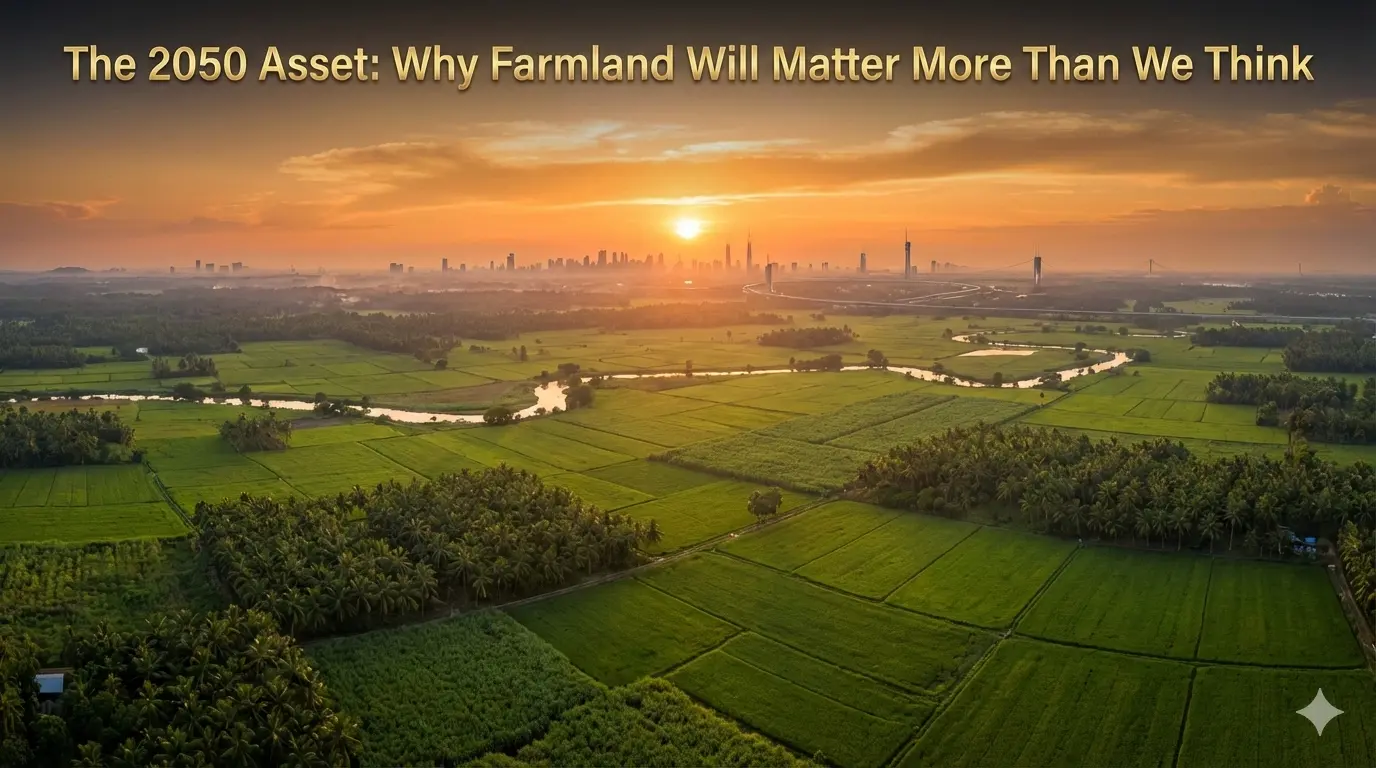
As cities grow vertically, productive land becomes increasingly scarce.
The assets of the future won’t just be profitable. They will be foundational.
🌱 Food Security Is the New Stability
Every nation prioritizes:
- Water
- Energy
- Agriculture
Governments protect agricultural zones because food production is strategic.
Owning farmland is not just owning property — it’s owning a piece of a national priority sector.
🏙️ Urban Expansion Has Limits
Cities can expand only so much before:
- Infrastructure becomes strained
- Cost of living spikes
- Livability declines
As this happens, peri-urban farmland (land near growing cities) gains importance — both economically and strategically.
📈 The Invisible Appreciation Driver
Unlike residential projects driven by marketing cycles, farmland value grows because of:
- Infrastructure spillover
- Industrial corridor expansion
- Long-term land scarcity
It appreciates quietly, often unnoticed — until it becomes expensive.
🔒 Control in an Uncertain Future
In 2050, the most valuable assets may be:
- Productive land
- Water access
- Low-density space
- Self-sustaining resources
Farmland offers exposure to all four.
💡 The Strategic Question
When future generations look back, which asset will feel wiser to own?
A depreciating apartment? Or appreciating, usable, essential land?
Final Thought
Farmland isn’t a fast asset. It’s a future asset.
And sometimes the smartest investments are the ones aligned not with the next trend — but with the next era.
The question isn’t “Is farmland profitable?” The real question is: “Will productive land become more important over time?”
History suggests yes.