
Managed Farmland vs Traditional Land: Which Is Better in 2026? | MyFarmland.co
📍 Introduction
Farmland investment has evolved significantly over the past decade. What was once considered a traditional, hands-on investment is now becoming a modern, managed asset class.
Investors today are not just looking for land — they are looking for ease, security, and returns.
This has led to the rise of two distinct investment options:
- Managed Farmland
- Traditional Farmland
Understanding the difference between these two can help you make a smarter investment decision in 2026.
🌱 What Is Managed Farmland?
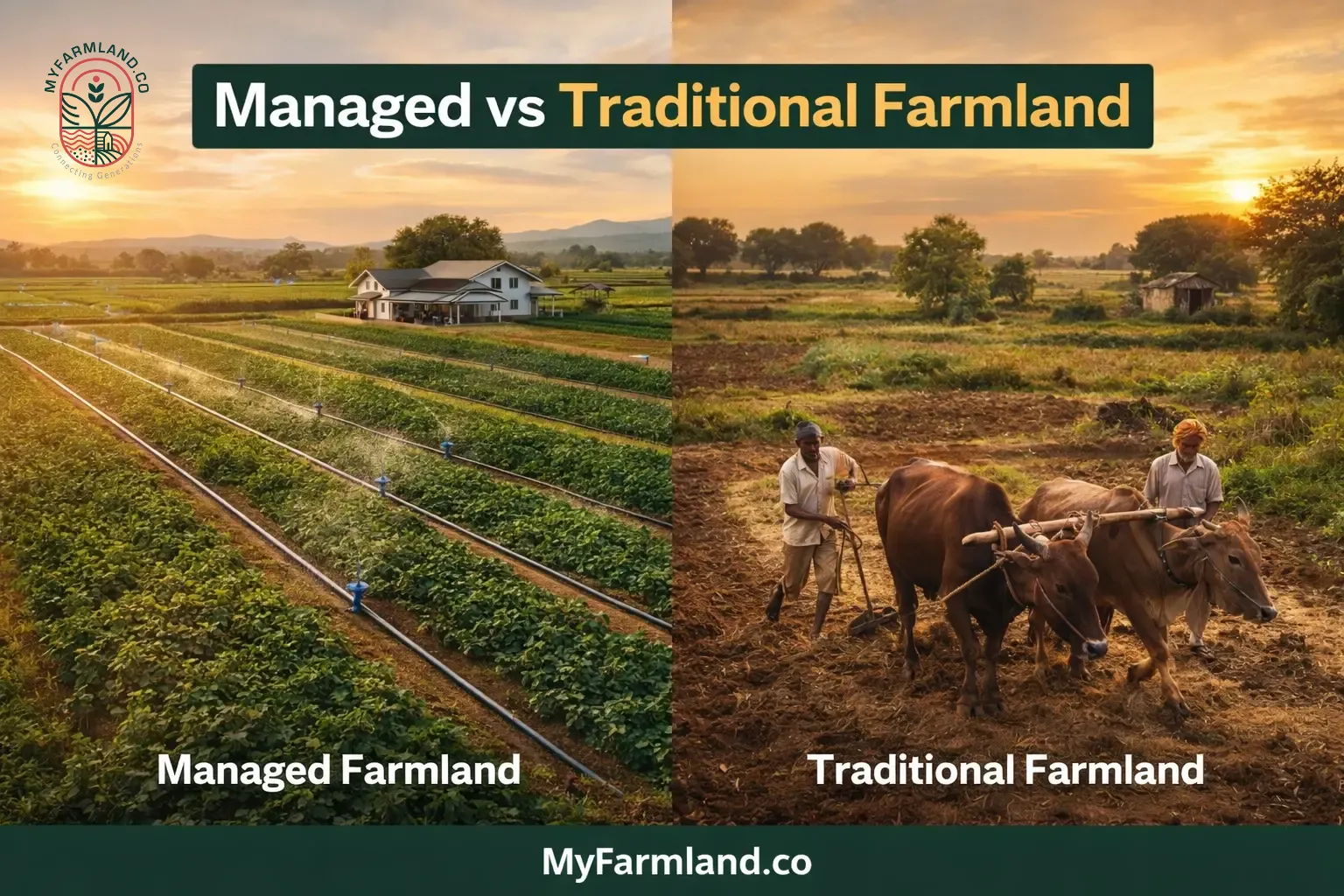
Managed farmland is a type of investment where the land is owned by you, but managed by professionals.
This includes:
- Land development
- Plantation
- Irrigation setup
- Maintenance
- Security
Platforms like MyFarmland.co offer access to verified managed farmland projects, making it easier for investors to enter this space.
🌾 What Is Traditional Farmland?
Traditional farmland is the conventional form of land ownership where the investor is responsible for:
- Farming decisions
- Labor management
- Maintenance
- Water management
While it gives complete control, it also requires time, effort, and expertise.
⚖️ Managed vs Traditional Farmland: Detailed Comparison
🧠 1. Ease of Management
Managed Farmland:
- Fully handled by professionals
- No day-to-day involvement
Traditional Farmland:
- Requires constant monitoring
- Needs agricultural knowledge
👉 Winner: Managed Farmland
💰 2. Investment Returns
Managed Farmland:
- Structured growth
- Possible income from crops
Traditional Farmland:
- Depends on personal effort
- Uncertain returns
👉 Winner: Managed Farmland
⏳ 3. Time Commitment
Managed Farmland:
- Passive investment
Traditional Farmland:
- Active involvement required
👉 Winner: Managed Farmland
🛡️ 4. Risk Factor
Managed Farmland:
- Lower risk due to professional handling
Traditional Farmland:
- Higher risk if mismanaged
👉 Winner: Managed Farmland
🌿 5. Lifestyle Value
Both offer:
- Nature access
- Farmhouse potential
But managed farmland often includes:
- Better infrastructure
- Planned layouts
📈 Why Managed Farmland Is Trending in 2026
Several factors are driving this shift:
🚀 Urban Investor Demand
People living in cities want passive investments.
🌍 Lifestyle Upgrade
Investors want:
- Weekend homes
- Green living
📊 Professional Management
Companies now offer structured farmland solutions.
👉 This is why platforms like MyFarmland.co are gaining popularity.
🏡 Who Should Choose Managed Farmland?
Managed farmland is ideal for:
- IT professionals
- Business owners
- NRIs
- First-time investors
Especially those who:
- Don’t have time to manage land
- Want passive returns
- Prefer low-risk investments
🌾 Who Should Choose Traditional Farmland?
Traditional farmland may suit:
- Experienced farmers
- Full-time investors
- People with agricultural knowledge
💡 Investment Insight
The biggest shift in 2026 is this:
👉 Investors no longer want to work on land 👉 They want land to work for them
This is exactly what managed farmland offers.
🏆 Final Conclusion
Both options have their advantages — but for modern investors, the choice is clear:
👉 Managed farmland is more practical, scalable, and efficient.
With platforms like MyFarmland.co, investing in farmland has become:
✔ Easier ✔ Safer ✔ More profitable
myfarmland.co