
Managed Farmland vs Traditional Farmland: Which Investment Is Better in 2026? | MyFarmland.co
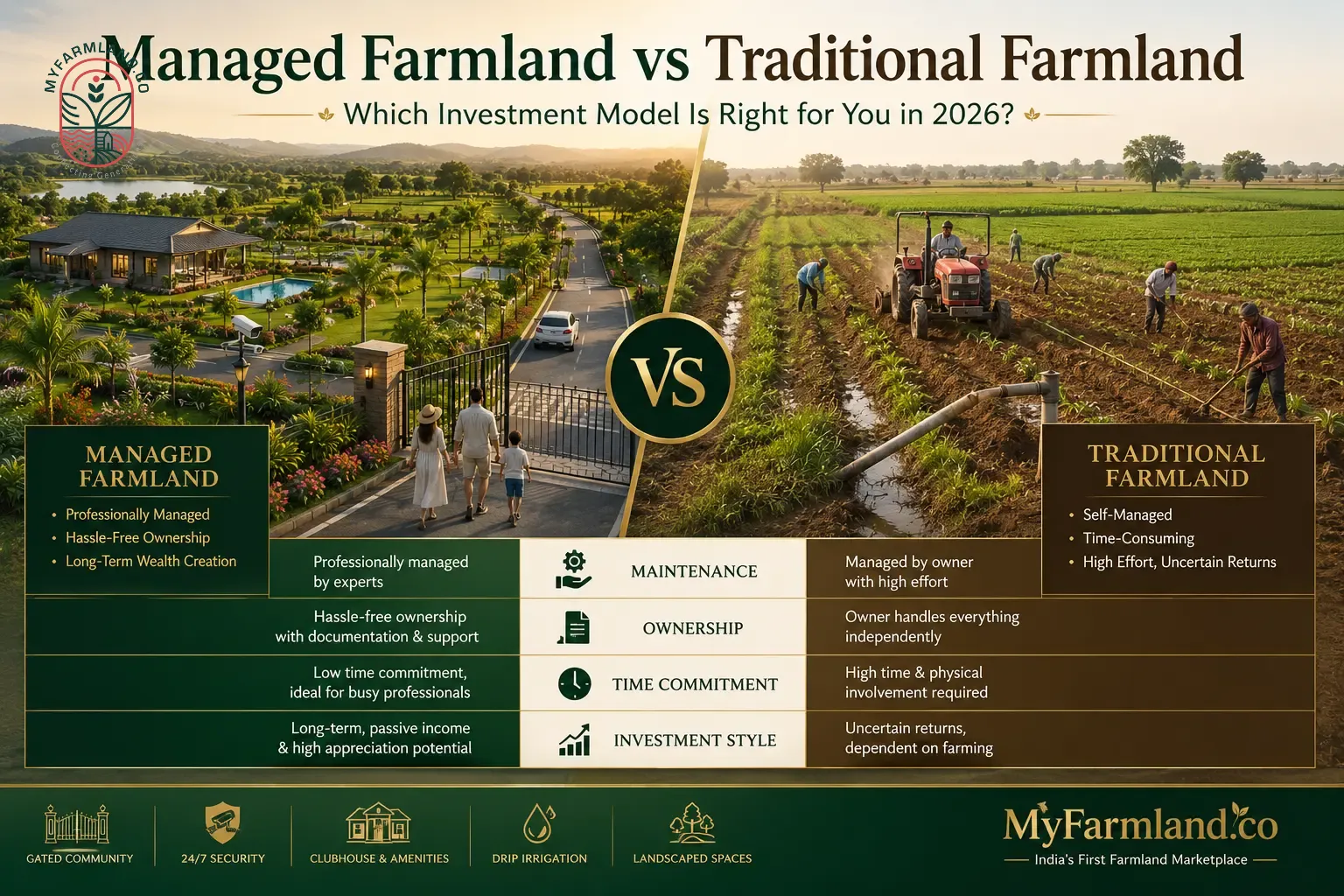
Managed Farmland vs Traditional Farmland: Which Investment Is Better?
Farmland has become one of India's fastest-growing alternative investment categories.
But buyers often face an important question:
Should I buy managed farmland or traditional farmland?
Both offer land ownership, but they are designed for different types of investors.
Choosing the right option depends on your goals, budget, lifestyle, and involvement in farming.
In this guide, we'll compare both models to help you make an informed decision.
What Is Managed Farmland?
Managed farmland is agricultural land where you own a legally registered plot while a professional management company handles day-to-day farm operations.
Services often include:
- Plantation management
- Drip irrigation
- Security
- Landscaping
- Tree maintenance
- Water management
- Common area maintenance
This model is ideal for investors who want farmland ownership without managing daily agricultural activities.
What Is Traditional Farmland?
Traditional farmland is agricultural land purchased directly from a landowner.
The buyer is responsible for:
- Farming operations
- Plantation planning
- Hiring labor
- Irrigation
- Security
- Maintenance
- Legal compliance
- Property development
This option provides complete control but also requires greater involvement.
Managed Farmland vs Traditional Farmland
| Feature | Managed Farmland | Traditional Farmland |
|---|---|---|
| Ownership | Registered agricultural plot | Registered agricultural land |
| Maintenance | Professional management | Owner manages everything |
| Plantation | Usually included | Owner decides |
| Security | Often provided | Owner arranges |
| Irrigation | Usually maintained | Owner installs and maintains |
| Time Commitment | Low | High |
| Best For | Professionals, NRIs, first-time investors | Experienced farmers, agricultural businesses |
| Lifestyle Use | Excellent for weekend visits | Depends on development |
| Initial Effort | Low | Higher |
Advantages of Managed Farmland
1. Hassle-Free Ownership
You don't need to:
- Hire workers
- Supervise plantations
- Visit every week
- Maintain irrigation systems
Professional teams manage routine operations.
2. Ideal for Busy Professionals
Many buyers are:
- IT professionals
- Entrepreneurs
- Doctors
- NRIs
- Business owners
Managed farmland allows them to own agricultural land while continuing their careers.
3. Better Weekend Experience
Many managed farmland communities include:
- Internal roads
- Landscaped greenery
- Security
- Clubhouses
- Farm stay facilities
- Recreational spaces
This makes them suitable for family visits and weekend retreats.
4. Professionally Planned Infrastructure
Projects may include:
- Drip irrigation
- Water storage
- Solar lighting
- Internal roads
- Fencing
- CCTV
- Plantation layouts
Infrastructure planning improves convenience for owners.
Advantages of Traditional Farmland
Complete Freedom
Owners decide:
- Which crops to grow
- Plantation design
- Irrigation methods
- Future development
- Farming techniques
There are no management restrictions.
Lower Ongoing Costs
Traditional farmland may have fewer recurring maintenance charges because the owner manages operations directly.
However, owners should budget separately for labor, maintenance, irrigation, and other expenses.
Suitable for Active Farming
If your goal is to farm full-time or operate an agricultural business, traditional farmland provides greater flexibility.
Challenges of Managed Farmland
Consider these points before investing:
- Annual maintenance fees may apply.
- Management quality varies by developer.
- Plantation choices may be standardized.
- Owners should understand service agreements before purchasing.
Always review the management contract carefully.
Challenges of Traditional Farmland
Traditional ownership often requires:
- Regular site visits
- Farm supervision
- Labor management
- Water planning
- Security arrangements
- Equipment management
This may not suit investors living far from the property.
Which Option Is Right for You?
Choose Managed Farmland If You:
- Live in a city
- Have limited time
- Want professional maintenance
- Prefer a passive ownership experience
- Are buying your first farmland investment
Choose Traditional Farmland If You:
- Have farming experience
- Want complete operational control
- Plan to cultivate crops yourself
- Can actively manage the property
- Understand agricultural operations
Legal Due Diligence Matters in Both Cases
Regardless of the model you choose, always verify:
- Title deed
- Encumbrance Certificate
- Revenue records
- Survey boundaries
- Water availability
- Access roads
- Applicable agricultural regulations
Legal verification should never be skipped.
Why Location Still Matters Most
Whether you buy managed or traditional farmland, prioritize:
- Reliable water sources
- Good road connectivity
- Infrastructure growth
- Productive soil
- Future development potential
Quality land in a strong location often matters more than the ownership model.
Why Investors Choose MyFarmland.co
At MyFarmland.co, we help buyers compare verified farmland opportunities across different investment categories.
You can explore:
- Managed farmland projects
- Premium farmland communities
- Pre-launch opportunities
- Plantation-based investments
- Educational resources for farmland investors
Our goal is to help investors make informed decisions through transparency and verified information.
Visit:
Conclusion
Managed farmland and traditional farmland both offer valuable opportunities, but they serve different investor profiles.
If you want a hands-off investment with professional support, managed farmland may be the better choice.
If you prefer full control and active farming, traditional farmland may suit your goals.
The most successful farmland investments begin with:
- Clear legal ownership
- Reliable water
- Strong location
- Professional due diligence
- Long-term planning
Choose the model that aligns with your investment objectives—not just your budget.
Frequently Asked Questions
Is managed farmland legally owned by the buyer?
In most projects, buyers receive ownership of a registered agricultural plot. Always verify the legal structure, title, and documentation before purchasing.
Does managed farmland generate guaranteed income?
No. Any income depends on the project's operations, market conditions, and applicable agreements. Be cautious of guaranteed return claims.
Is traditional farmland cheaper?
It depends on the location, infrastructure, and land quality. Traditional farmland may have a lower purchase price in some areas but often requires additional investment for development and maintenance.
Which option is better for first-time investors?
Many first-time buyers prefer managed farmland because it reduces day-to-day operational responsibilities, though the right choice depends on individual goals.
- Best Managed Farmland Projects Near Bangalore
- Complete Checklist Before Buying Farmland in India
- Why Water Is the Most Valuable Asset in Farmland
- Land Title Verification Guide
- Top 7 Mistakes Farmland Buyers Make
- STRR Impact on Farmland Prices
- Top 10 Farmland Locations Near Bangalore
- Why Red Sandalwood Is a Great Long-Term Investment
- Managed Farmland vs Traditional Farmland
- Managed Farmland India
- Traditional Farmland Investment
- Best Farmland Investment India
- Managed Farm Plots
- Agricultural land investment
- Premium farmland near Bangalore
- Farmland buying guide
- Managed plantation projects
- Verified farmland
- MyFarmland.co