
From Screens to Soil: Why Urban Professionals Are Buying Farmland.
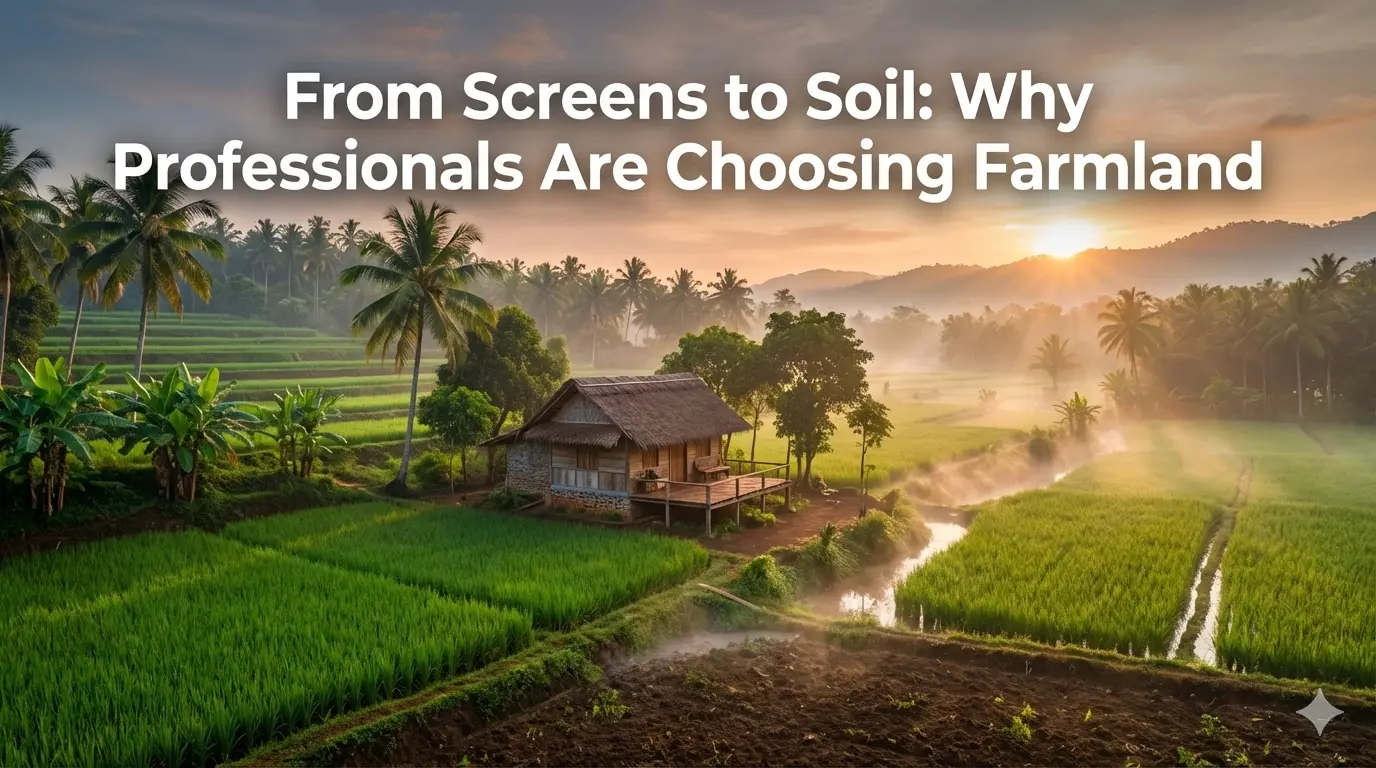
The Burnout Factor
Cities offer opportunity, but they also bring:
- Constant screen exposure
- Noise and crowd fatigue
- Limited connection with nature
Farmland has become a response to burnout—an antidote to over-urbanized living.
Farmland as a Personal Reset Space
For many buyers, farmland is:
- A weekend escape
- A place to disconnect from digital overload
- A space for family, children, and slow living
It’s not about yield alone—it’s about mental return on investment.
Ownership Without Pressure
Unlike homes, farmland doesn’t demand:
- Daily maintenance presence
- Constant upgrades
- Lifestyle compromises
With managed farmland options, professionals can own land without disrupting their primary careers.
A New Definition of Wealth
Today’s wealth isn’t just money—it’s:
- Time
- Peace
- Control over one’s environment
Farmland offers all three, quietly and consistently.
Why This Trend Is Growing Now
Several forces are aligning:
- Remote and hybrid work
- Better road connectivity
- Increased trust in managed farmland models
Together, they’ve made farmland ownership practical for urban professionals.
Not an Exit—An Extension
Most buyers aren’t leaving the city forever. They’re creating a parallel life—one rooted in soil, silence, and space.
Conclusion
Farmland is no longer just an agricultural asset. For a new generation, it’s a well-being asset.
Sometimes, the smartest investment is not in growth—but in grounding.