
Farmland Landlocked? Why Legal Road Access Can Make or Break Your Investment
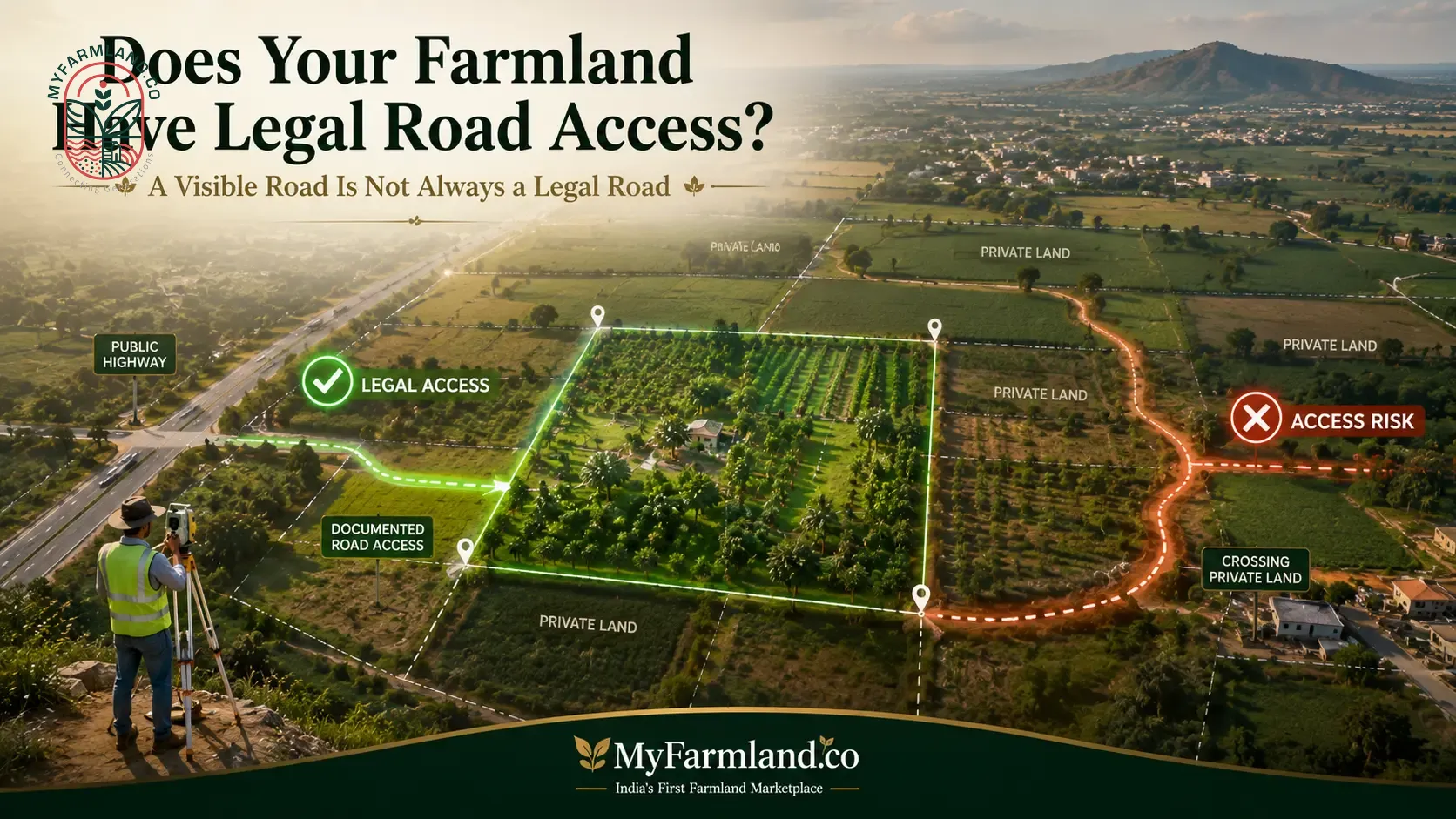
Farmland Landlocked? Why Legal Road Access Can Make or Break Your Investment
Imagine buying a beautiful farmland property.
The title appears clear.
The location looks attractive.
The price seems reasonable.
There is just one problem.
You cannot legally access your own land.
This is one of the most overlooked risks in farmland investment.
Many buyers see a road leading toward the property and assume:
"Road is available."
But a visible road and a legally established right of access are not always the same thing.
Before buying farmland, investors should understand not only where the road is, but also:
- Who owns the road?
- Is it a public road?
- Is access reflected in relevant records?
- Does the property have a documented right of way?
- Can the owner use the road without future disputes?
What Is Landlocked Farmland?
Landlocked farmland generally refers to land that does not have direct access to a public road.
The property may be surrounded by:
- Other private agricultural land
- Estates
- Forest areas
- Private developments
- Other parcels owned by different individuals
In some cases, buyers can physically reach the land through a neighboring property.
But physical access today does not automatically mean guaranteed legal access tomorrow.
The Biggest Mistake: Trusting What You See
During a site visit, a salesperson may drive you directly to the property.
You see a beautiful dirt road.
You assume everything is fine.
But ask yourself:
Who owns this road?
It could be:
- A government road
- A Panchayat road
- A private access road
- A neighboring owner's land
- A shared right of way
These differences matter.
A road used informally for years may still create complications if access rights are disputed.
Why Legal Road Access Is Important
1. You Need Access to Use the Land
Without reliable access, even basic activities become difficult.
How will you bring:
- Agricultural equipment?
- Construction materials where legally permitted?
- Workers?
- Saplings?
- Fertilizer?
- Water equipment?
Accessibility directly affects the usability of farmland.
2. It Can Affect Resale Value
Imagine selling the property in the future.
A potential buyer asks:
"Show me the legal road access documents."
If the answer is unclear, the buyer may hesitate.
Poor or uncertain access can reduce the number of interested buyers and complicate the resale process.
3. Banks May Consider Access During Due Diligence
Where financing is involved, lenders may conduct their own property and legal checks.
Clear access can be an important aspect of overall property due diligence.
How to Check Road Access Before Buying Farmland
Step 1: Visit the Property
Don't rely only on:
- Google Maps
- Brochures
- Drone videos
- Location pins
Visit the property physically.
Check the complete route from the nearest major road to the exact survey parcel.
Step 2: Identify the Road Type
Ask:
- Is this a public road?
- Is it maintained by a local authority?
- Is it a private road?
- Is it part of another survey number?
- Is it a designated access road?
Request relevant documentation wherever available.
Step 3: Check the Survey Map
A survey map can help identify:
- Property boundaries
- Survey numbers
- Adjacent parcels
- Access routes
Compare the documents with the physical site.
Step 4: Ask About Right of Way
If access crosses another property, ask whether a legally documented right of way or easement exists.
Don't rely only on statements such as:
"Everyone uses this road."
Or:
"The neighbor will never stop you."
Ownership can change.
Relationships can change.
Future disputes can arise.
Documented rights provide greater clarity than verbal promises.
A Road on Google Maps Is Not Enough
This is an important point.
Satellite imagery can show a visible path.
But it may not reveal:
- Legal ownership
- Access rights
- Easements
- Property disputes
- Future restrictions
Use online maps as a starting point, not as final legal evidence.
What Should You Ask the Seller?
Before paying a booking amount, ask:
- What is the legal access route to the property?
- Is the road public or private?
- Which authority maintains it?
- Does the property have direct road frontage?
- If access crosses another property, what legal right exists?
- Is the access route shown in relevant survey or property records?
- Are there any disputes regarding the road?
Request answers and supporting documents rather than relying entirely on verbal assurances.
Common Road Access Red Flags
Be cautious if you hear:
"Road will come in the future."
Ask for official evidence.
"The neighbor allows access."
Permission can change.
"The road is visible on Google Maps."
Visibility does not prove legal rights.
"Everyone in the area uses it."
Common use does not automatically establish your legal entitlement.
"Don't worry about documents."
That is exactly when you should worry.
Road Width Matters Too
Even when access exists, consider whether the road is practically usable.
Ask:
- Can a car reach the property?
- Can agricultural machinery enter?
- Is access available throughout the year?
- Does heavy rain affect the route?
- Are there bottlenecks or disputed sections?
A narrow or seasonal access route can affect the practical usability of farmland.
Legal Access vs Physical Access
This is the key difference:
Physical Access
You can currently reach the land.
Legal Access
You have a recognized legal right to use the access route.
Ideally, a buyer should verify both.
You need to be able to reach the land today and have confidence that access will remain available.
Why This Matters for Managed Farmland
In managed farmland projects, buyers should also examine:
- Entry and exit roads
- Internal roads
- Road ownership or maintenance arrangements
- Access to individual plots
- Whether common infrastructure is properly documented
A beautiful internal road inside a project does not eliminate the need to understand how the project itself connects to the public road network.
The Farmland Road Access Checklist
Before purchasing, verify:
| Check | Status |
|---|---|
| Physical access to the property | Yes / No |
| Road ownership identified | Yes / No |
| Access route verified | Yes / No |
| Survey records reviewed | Yes / No |
| Right of way checked where applicable | Yes / No |
| Road usable throughout the year | Yes / No |
| Agricultural vehicles can access | Yes / No |
| No known access dispute | Yes / No |
Why MyFarmland.co Focuses on Smarter Farmland Buying
At MyFarmland.co, we believe farmland buyers should look beyond price and scenic views.
Important factors include:
- Legal documentation
- Road access
- Water availability
- Location
- Infrastructure
- Property usability
- Long-term marketability
A good farmland investment starts with asking the right questions.
Conclusion
A beautiful piece of farmland can lose much of its practical value if access becomes a problem.
Before buying, don't just ask:
"Is there a road?"
Ask:
"Who owns it, and what gives me the right to use it?"
That single question could save you from a major farmland investment mistake.
Clear title matters.
Reliable water matters.
But legal road access can be equally important.
Frequently Asked Questions
Can I buy farmland without direct road access?
It may be possible, but access rights and the applicable legal position should be carefully verified before purchasing. Consult a qualified property lawyer for property-specific advice.
Is a road shown on Google Maps proof of legal access?
No. Online maps and satellite imagery do not by themselves establish legal ownership or access rights.
What is a right of way?
A right of way generally refers to a legal right to pass through or use another property for access, subject to the applicable laws and facts of the case.
Why does road access affect farmland value?
Access can influence usability, agricultural operations, buyer demand and resale marketability.